TEME MUGS · MANUFACTURING
Ceramic Mugs / Manufacturing Process
How Ceramic Mugs Are Made: Manufacturing Process
Ceramic mugs pass through a series of material, shaping, surface and inspection decisions before they are packed. This is a buyer-oriented guide to a typical ceramic mug manufacturing process, not a claim that every mug follows one route or that every illustrated machine belongs to Teme Mugs. Use the stages below to decide what to specify, when to approve a sample and what to confirm with the proposed manufacturer.
Review Your Mug Specifications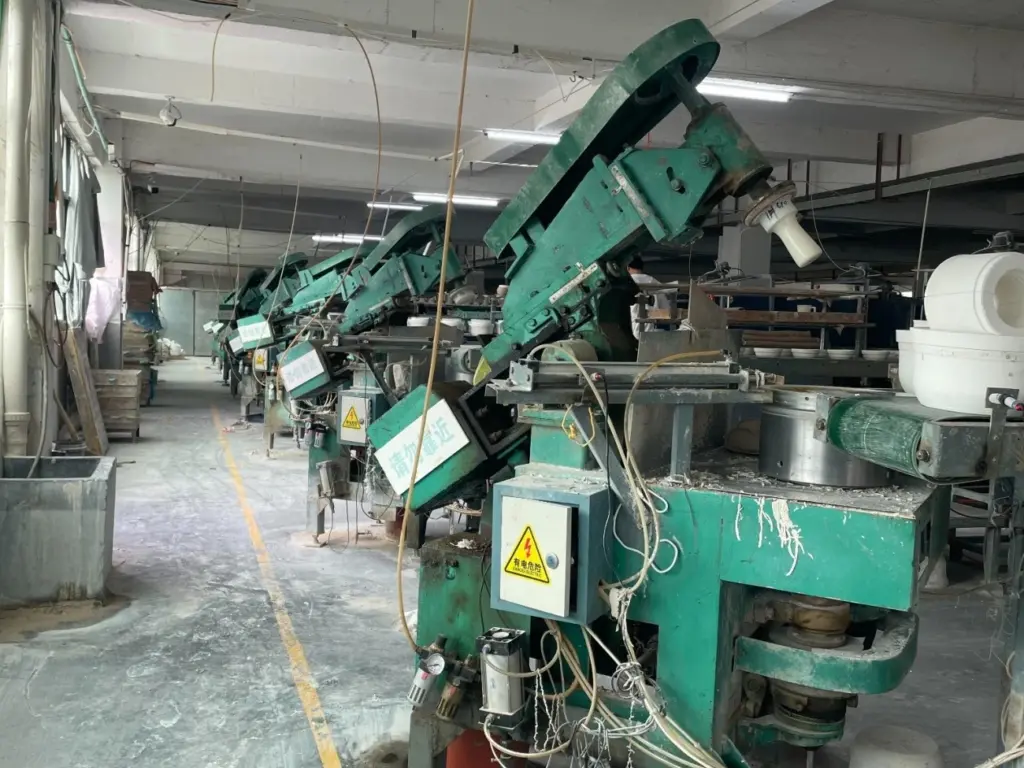
| Stage | Buyer reference | Open question to resolve |
|---|---|---|
| Specification | Drawing, capacity definition and intended use | Which requirements are fixed? |
| Appearance | Finish and artwork sample | Which variants does it represent? |
| Packing and checks | Packed reference and inspection brief | What evidence is needed? |
| Order and shipment | Written terms and shipment information | Who approves a change? |
01. Confirm Product Design
Define capacity, handle and artwork areas
Define the mug before defining the production schedule. Specify whether capacity means a normal working fill or a rim fill, and show the overall profile, handle position and decoration areas. A clear drawing or annotated reference reduces the chance that two parties quote different interpretations of the same design.
Record acceptance criteria
List essential dimensions, permitted variation and the evidence needed for any use claim. Separate appearance approval from functional approval. The agreed drawing, artwork version and sample reference should travel together through the project so that later changes are not mistaken for the original requirement.
02. Ceramic Body Preparation
Body selection and preparation
Ceramic bodies are prepared for the chosen forming route. Their composition and processing affect the behavior of the piece, but a white or cream-colored object in a photograph does not identify the recipe. Body selection must be connected to the intended shape, finish and product-specific performance requirements.
What material records to request
Ask for the proposed body description and the scope of any supporting material or finished-product documentation. A generic raw-material statement is not equivalent to evidence for a decorated, finished mug. The materials and glazing guide sets out the questions to take into a specification review.
03. Mug Forming and Handle Attachment
Select a forming route
Mugs may be formed using different methods, depending on the body and geometry. Handle design and attachment deserve attention because the final outline alone does not show how the parts were made. Confirm the proposed route with the production party rather than assigning a method from workshop equipment photographs.
Review handle and body junctions
Check the handle opening, connection areas, balance and intended grip on the actual sample. Changes at this stage can affect other dimensions and decoration space. If your concept requires a new form, document the revisions and discuss feasibility through an OEM brief before assuming that tooling is straightforward.
04. Drying and Initial Inspection
Drying and handling risks
Drying removes moisture before later processing. Uneven drying can contribute to distortion or cracking, so the sequence and handling conditions matter. The rack photographs show pieces arranged in a workshop; they do not establish their moisture state, the drying conditions or a measured rejection rate.
Check shape before the next stage
A buyer can ask when shape and visible defects are checked, how pieces are handled between stages and how an issue is escalated. The purpose is to understand the proposed controls. Do not substitute a photograph of many pieces for a defined inspection requirement or a documented result.
05. Glazing and Firing
Glaze appearance and coverage
Glazing and firing turn a chosen body and surface treatment into the finished appearance. Color and surface character can vary with the material and process. Some production routes use more than one firing. Exact temperatures, firing duration and kiln configuration are product- and facility-specific details that are not established by this gallery.
Firing route and finish variation
Approve a representative physical finish sample under agreed viewing conditions. Identify the reference color, acceptable variation and surfaces that matter most to your brand. The materials guide covers finish choices; the factory review page explains why an image of a chamber opening is not proof of a particular firing capability.
06. Decoration and Logo Application
Artwork proof before decoration
A logo or pattern may enter the process at different stages, depending on the decoration system. Begin with the artwork, the selected mug and the intended position. A drawing shows placement intent, while a physical sample helps evaluate the appearance on the actual curved surface.
Physical sample after decoration
Keep the approved artwork version, print area and color reference in the order record. Confirm any special care or durability claim with suitable evidence for the finished product. Do not infer sublimation suitability, dishwasher performance or microwave use from a blank surface or a printed example.
07. Final Inspection and Packing
Inspect against the agreed sample
Final inspection should refer to an agreed specification rather than a general description such as premium quality. Appearance, dimensional definitions, decoration placement and packaging each need a review scope. Sampling and acceptance criteria should be agreed before the inspection is relied upon for a shipment decision.
Protect and identify the approved goods
Check that product identification, quantities and approved packing correspond to the order. Internal protection must account for handles, rims and surfaces. Handling crates and stacked cartons in a workshop photograph show an environment, not proof that a particular export pack has passed a transport test.
Buyer Approval Gates
Buyer sign-off by stage
Use four approval gates: specification and feasibility; appearance and decoration sample; packing and inspection requirements; final order and shipment documentation. At each gate, identify the version reviewed, the person giving approval and the questions still open. An unclear sign-off should not silently become a production instruction.
Changes after approval
A late change to color, handle form, print area or packaging can affect work already reviewed. Keep a change record and request confirmation of its implications for cost, sampling and schedule. There is no single manufacturing timetable that can be safely applied to every ceramic mug project.
Production Reference Photograph
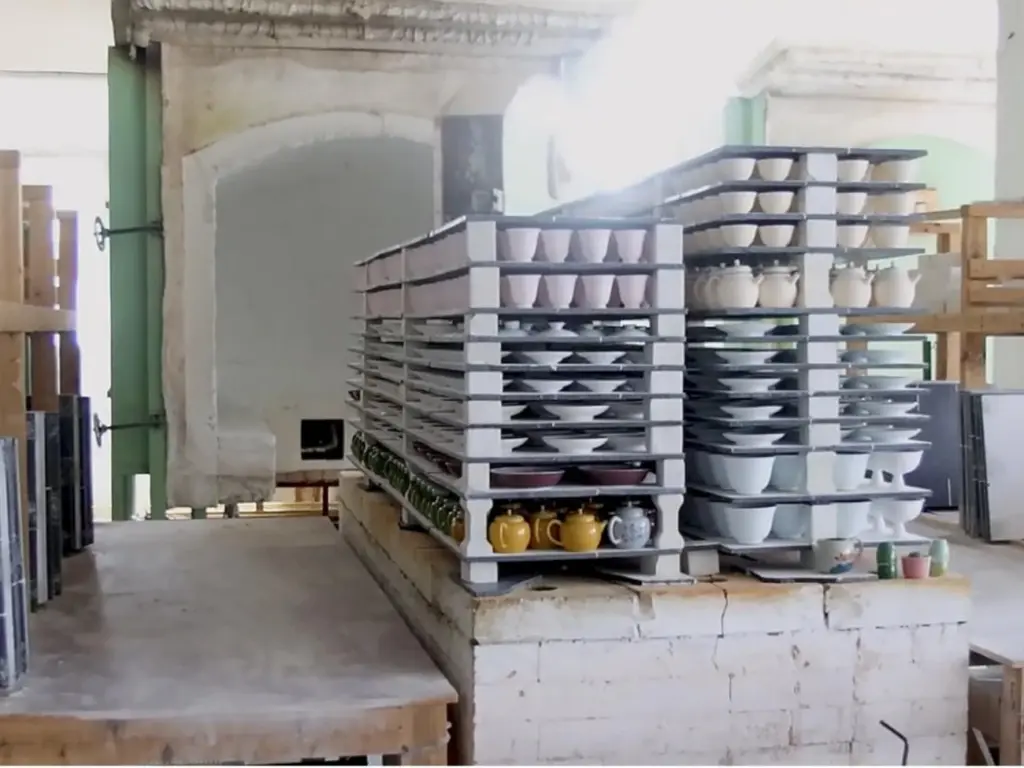
This image shows ceramic pieces and a loading rack beside a chamber opening. Firing parameters, equipment type and the relationship to a proposed order require separate confirmation.
Buyer Questions
How many production steps does a ceramic mug require?
There is no fixed step count for every ceramic mug. Forming, drying, glazing, firing, decoration, inspection and packing are useful headings, but the precise sequence depends on the body, design and decoration route. For a purchase, request the proposed route and identify the sample and inspection checkpoints that matter to your specification instead of using a generic diagram as a factory audit.
When is a logo applied to a mug?
The timing depends on the decoration method and the selected surface. Some designs involve decoration associated with firing, while other systems are applied to an already prepared surface. Ask which method is proposed for your artwork, when a physical sample can be reviewed and which care claims have supporting evidence. The website does not establish one decoration route for every listed mug.
What causes ceramic glaze color variation?
A ceramic finish can be influenced by the body, glaze application and firing conditions. A screen photograph also changes how color appears. Agree a physical reference and the conditions for comparison, and discuss acceptable variation before ordering. A workshop photograph cannot diagnose a particular batch or establish that a specific color tolerance has been achieved.
What should buyers approve before bulk production?
Approve the product specification, appearance reference, artwork version and placement, required evidence for use claims, packing configuration and inspection basis. Identify who approves each item and how changes are recorded. Where a sample does not represent every variant or the final packaging, state that limitation. Written approval should make the order clearer rather than implying that every technical question has been resolved.
Review Your Mug Specifications
Contact Dan with the product reference, estimated quantity and the decision you need to make next. Include the market, artwork, packing and destination where relevant.
Review Your Mug Specifications